
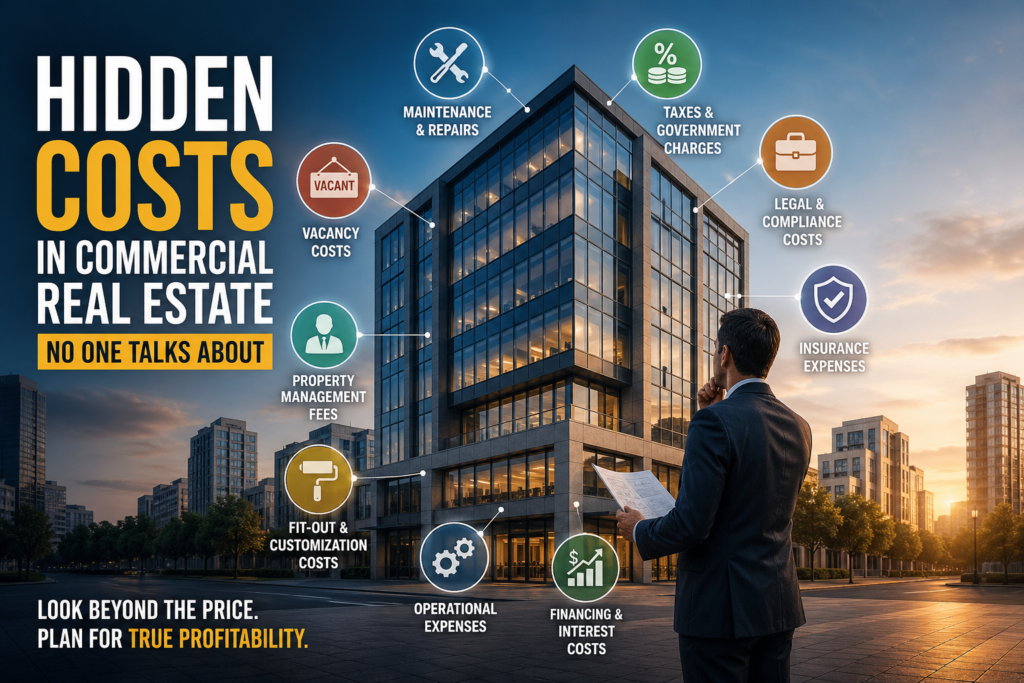
Commercial real estate often looks like a straightforward investment—buy a property, lease it out, and generate steady income. However, the reality is more layered. Beyond the visible price tag, there are several hidden costs that can quietly impact your overall returns.
Understanding these costs early helps you make smarter decisions and avoid unexpected financial strain later.
1. Maintenance and Repairs
At first glance, a commercial property may appear fully ready. But over time, maintenance becomes unavoidable.
This includes:
- HVAC servicing
- Electrical repairs
- Plumbing fixes
- Structural upkeep
Unlike residential spaces, commercial properties often require higher-grade maintenance, which means higher costs.
2. Property Management Fees
If you’re not managing the property yourself, hiring a property manager is common. While it saves time, it comes at a cost.
Typically, property management fees range between 5% to 10% of rental income. Over time, this becomes a significant expense that investors often overlook during initial planning.
3. Vacancy Costs
Even in prime locations, vacancies happen.
When your property is unoccupied:
- No rental income is generated
- You still pay maintenance and utility bills
- Marketing costs increase to find new tenants
A few months of vacancy can impact your annual returns more than expected.
4. Legal and Compliance Charges
Commercial real estate involves multiple legal processes, including:
- Title verification
- Lease agreements
- Government approvals
- Regulatory compliance
Legal fees and documentation costs can add up quickly, especially if disputes arise.
5. Insurance Costs
Commercial properties require comprehensive insurance coverage, including:
- Property damage
- Fire and natural disasters
- Liability insurance
Premiums vary depending on location, building type, and risk factors, but they are an ongoing expense that cannot be ignored.
6. Taxes and Government Charges
Apart from the purchase price, you’ll need to account for:
- Property tax
- Stamp duty and registration
- Local municipal charges
These costs differ by region but can significantly increase the total investment amount.
7. Fit-Out and Customization Costs
Unlike residential properties, commercial tenants often require customized interiors.
This may include:
- Office layouts
- Cabling and IT infrastructure
- Branding and design elements
Sometimes landlords bear part (or all) of these costs to attract premium tenants.
8. Utility and Common Area Charges
Many investors forget recurring operational costs such as:
- Electricity for common areas
- Water supply
- Security services
- Elevator maintenance
These are often shared but still impact your net income.
9. Financing and Interest Costs
If you’ve taken a loan, interest payments can quietly eat into profits.
Additionally:
- Processing fees
- Prepayment penalties
- Interest rate fluctuations
All of these affect your overall return on investment.
10. Depreciation and Asset Upgrades
Over time, buildings lose value if not upgraded.
To stay competitive in the market, you may need to invest in:
- Renovations
- Technology upgrades
- Modern amenities
This is not a one-time cost—it’s an ongoing requirement.
Final Thoughts
Commercial real estate remains a powerful wealth-building asset—but only when approached with clarity.
Looking beyond the purchase price is essential. When you factor in hidden costs early, you gain a realistic view of profitability and can plan better for long-term success.
Smart investors don’t just calculate returns—they anticipate expenses.
FAQs: Hidden Costs in Commercial Real Estate
1. What are hidden costs in commercial real estate?
Hidden costs are expenses beyond the property purchase price, such as maintenance, taxes, legal fees, and vacancy losses that affect overall returns.
2. How much should I budget for maintenance?
A good rule is to allocate 1% to 3% of the property value annually, depending on the building’s age and usage.
3. Are property management fees worth it?
Yes, if you want hassle-free operations. However, you should factor these fees into your expected returns before investing.
4. How do vacancies affect returns?
Vacancies result in zero rental income while expenses continue, reducing your overall profitability.
5. Do tenants always pay for fit-outs?
Not always. In competitive markets, landlords may need to share or fully cover customization costs to secure tenants.
6. Are insurance costs mandatory?
While not always legally required, insurance is highly recommended to protect against unexpected losses.
7. What taxes apply to commercial properties?
Taxes include property tax, stamp duty, registration charges, and sometimes GST depending on the transaction type.
8. How can I reduce hidden costs?
- Choose properties in high-demand locations
- Conduct proper due diligence
- Plan for long-term maintenance
- Work with experienced professionals
9. Is commercial real estate still profitable after these costs?
Yes—but only when you accurately calculate all expenses and invest strategically.
10. What is the biggest hidden cost investors ignore?
Vacancy and maintenance costs are often underestimated, yet they have the biggest impact on returns.