
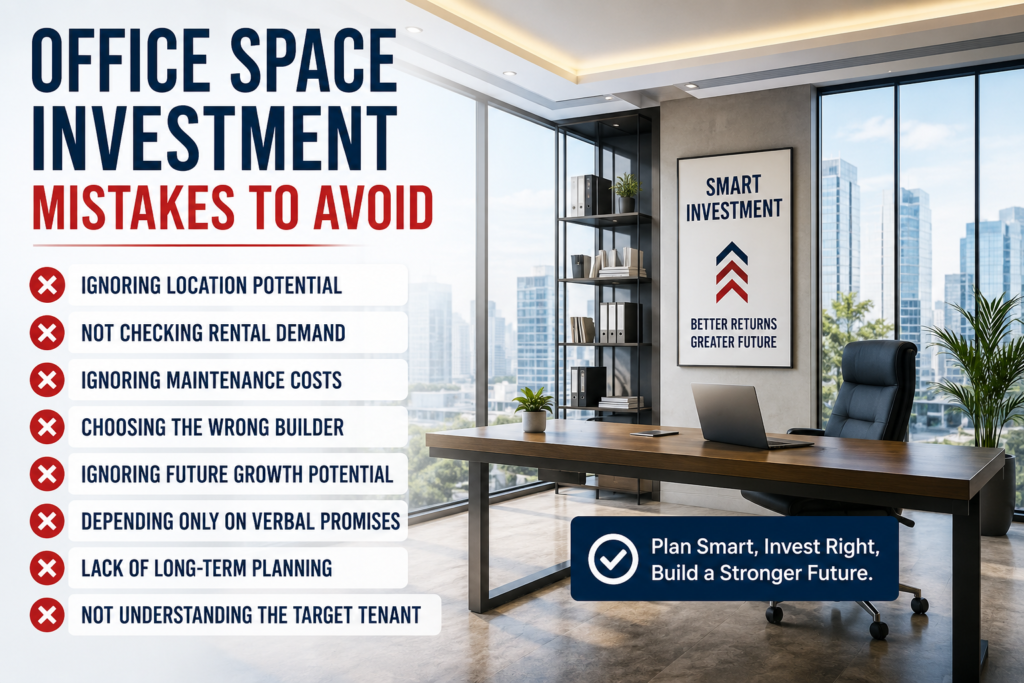
Investing in office space can create long-term income, asset appreciation, and business stability. But many first-time investors enter the commercial real estate market without understanding the common risks involved. A smart investment is not only about buying a property — it’s about choosing the right location, understanding demand, and planning for the future.
Here are the most common office space investment mistakes to avoid before making your decision.
1. Ignoring Location Potential
One of the biggest mistakes investors make is choosing a property only because the price looks attractive. In commercial real estate, location decides future demand.
An office space near IT hubs, business zones, highways, metro connectivity, or growing commercial areas usually has better appreciation and rental demand.
Before investing, check:
- Nearby business activity
- Future infrastructure developments
- Connectivity and accessibility
- Demand from companies and startups
A good location increases both occupancy and long-term value.
2. Not Checking Rental Demand
Many investors buy office spaces expecting immediate rental income without researching actual market demand.
A property may look premium, but if there are no tenants searching in that area, your investment may stay vacant for months.
Always research:
- Average rental demand in the area
- Occupancy rates
- Nearby office competition
- Type of businesses operating nearby
Rental income depends on market demand, not just property quality.
3. Investing Without Understanding Maintenance Costs
Commercial office spaces often include maintenance charges, security costs, parking management, and facility expenses.
Some investors focus only on purchase price and ignore ongoing expenses, which reduces overall profitability.
Before buying:
- Ask for monthly maintenance estimates
- Check common area charges
- Understand building management quality
- Verify hidden operational costs
A well-managed property keeps tenants satisfied and protects your asset value.
4. Choosing the Wrong Builder or Project
The reputation of the developer matters a lot in commercial projects. Delayed construction, poor quality, or legal issues can affect both rental income and resale value.
Before investing:
- Check previous projects
- Verify approvals and legal documents
- Research builder reputation
- Visit completed developments if possible
A trusted developer adds confidence for both investors and future tenants.
5. Ignoring Future Growth Potential
Some investors focus only on current conditions and forget future development opportunities.
Commercial property performs better in areas where:
- IT parks are expanding
- New roads or metro projects are coming
- Corporate offices are growing
- Population and business activity are increasing
Investing early in developing commercial zones can create better long-term appreciation.
6. Depending Only on Verbal Promises
Never make an investment decision based only on marketing promises or verbal commitments.
Always verify:
- Rental agreements
- Legal approvals
- Ownership documents
- Payment structure
- Return policies
Everything should be documented clearly before investing.
7. Lack of Long-Term Planning
Commercial real estate is usually a long-term asset. Some investors expect quick profits and become disappointed when results take time.
Office space investment works best when planned with:
- Long-term income goals
- Asset growth expectations
- Future business demand
- Stable holding strategy
Patience is important in commercial property investment.
8. Not Understanding the Target Tenant
Different office spaces attract different types of tenants. A small startup office and a corporate office space require different planning.
Before buying, understand:
- Who will rent the property?
- What businesses fit the location?
- What facilities do companies expect?
Knowing your target tenant helps reduce vacancy risks.
Final Thoughts
Office space investment can become a strong financial asset when chosen carefully. The right commercial property offers rental income, business demand, and future appreciation. But avoiding common mistakes is equally important.
Take time to research the market, verify documents, understand demand, and choose growth-focused locations. Smart decisions today can create long-term stability and value in the future.
For people looking to build assets beyond traditional investments, commercial office spaces continue to attract attention because of their growth potential and real business demand.
Frequently Asked Questions (FAQs) – Office Space Investment
1. Is office space investment a good option?
Yes, office space investment is considered a strong long-term asset because it can generate rental income and property appreciation. Commercial properties in growing business locations often attract stable tenant demand.
2. What should I check before investing in office space?
Before investing, check:
- Location potential
- Rental demand
- Builder reputation
- Legal approvals
- Maintenance costs
- Future infrastructure developments
These factors help reduce investment risks.
3. Which location is best for office space investment?
Locations near IT hubs, business districts, metro connectivity, highways, and developing commercial zones usually perform better for office investments.
Examples include rapidly growing business corridors in cities like Hyderabad, Bengaluru, and Pune.
4. What are the common mistakes in commercial property investment?
Common mistakes include:
- Ignoring location quality
- Not researching rental demand
- Investing without legal verification
- Choosing poor-quality projects
- Expecting quick profits
- Ignoring maintenance expenses
5. How does office space generate income?
Office spaces generate income through monthly rental payments from businesses, startups, retail brands, or corporate companies that lease the property.
6. Is commercial property better than residential property?
Commercial property often offers higher rental potential and longer lease periods compared to residential property. However, it also requires proper market research and planning.
7. What documents should I verify before buying office space?
Important documents include:
- Property approvals
- Ownership documents
- Building permits
- RERA registration (if applicable)
- Sale agreement
- Occupancy certificates
Always verify documents carefully before investing.
8. Can beginners invest in office space?
Yes, beginners can invest in office spaces if they research properly, understand market demand, and choose trusted projects and locations.
9. What affects office space appreciation?
Factors affecting appreciation include:
- Infrastructure growth
- Business demand
- Connectivity
- Nearby corporate development
- Metro and highway projects
- Overall commercial activity
10. Is office space investment risky?
Like any investment, commercial real estate has risks. Vacancy, market slowdown, poor location selection, or legal issues can affect returns. Proper research helps reduce these risks significantly.